


 Cart
Cart
 sales@molnova.com



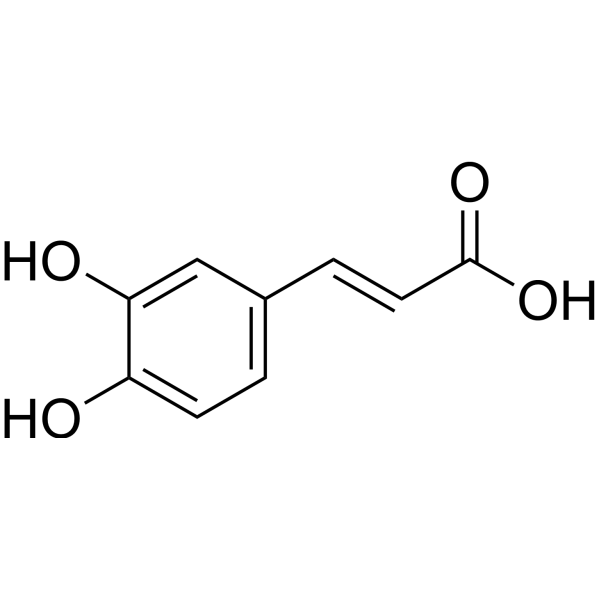
Trans-caffeic acid
CAS No. 501-16-6
Trans-caffeic acid( —— )
Catalog No. M31281 CAS No. 501-16-6
Trans-caffeic acid stearyl ester is posited to inhibit melanogenesis signaling while suppressing cAMP levels and, subsequently, MC1R, MITF, tyrosinase, TRP-2 and TRP-1 down-regulation, resulting in the suppression of tyrosinase activity, DOPA oxidase activity and melanin synthesis.
Purity : >98% (HPLC)
 COA
Datasheet
HNMR
HPLC
MSDS
Handing Instructions
COA
Datasheet
HNMR
HPLC
MSDS
Handing Instructions
| Size | Price / USD | Stock | Quantity |
| 50MG | Get Quote | In Stock |


|
| 100MG | Get Quote | In Stock |
|
Biological Information
-
Product NameTrans-caffeic acid
-
NoteResearch use only, not for human use.
-
Brief DescriptionTrans-caffeic acid stearyl ester is posited to inhibit melanogenesis signaling while suppressing cAMP levels and, subsequently, MC1R, MITF, tyrosinase, TRP-2 and TRP-1 down-regulation, resulting in the suppression of tyrosinase activity, DOPA oxidase activity and melanin synthesis.
-
DescriptionTrans-caffeic acid stearyl ester is posited to inhibit melanogenesis signaling while suppressing cAMP levels and, subsequently, MC1R, MITF, tyrosinase, TRP-2 and TRP-1 down-regulation, resulting in the suppression of tyrosinase activity, DOPA oxidase activity and melanin synthesis.
-
In Vitro——
-
In Vivo——
-
Synonyms——
-
PathwayOthers
-
TargetOther Targets
-
Recptor——
-
Research Area——
-
Indication——
Chemical Information
-
CAS Number501-16-6
-
Formula Weight180.2
-
Molecular FormulaC9H8O4
-
Purity>98% (HPLC)
-
Solubility——
-
SMILES——
-
Chemical Name——
Shipping & Storage Information
-
Storage(-20℃)
-
ShippingWith Ice Pack
-
Stability≥ 2 years
Reference
molnova catalog



related products
-
Methylmalonic acid
Methylmalonate (MMA) is a dicarboxylic acid that can be derived from methylmalonyl-coenzyme A. It is an indicator of Vitamin B-12 deficiency in cancer.
-
2-(2-fluoro-6-methox...
2-(2-fluoro-6-methoxyphenyl)pyrimidine-4-carboxylic acid is commonly used to synthesize compounds with anticancer and antitumor properties.
-
Epiafzelechin-(2beta...
The seeds of Vitis vinifera.
